By: Claire Butcher
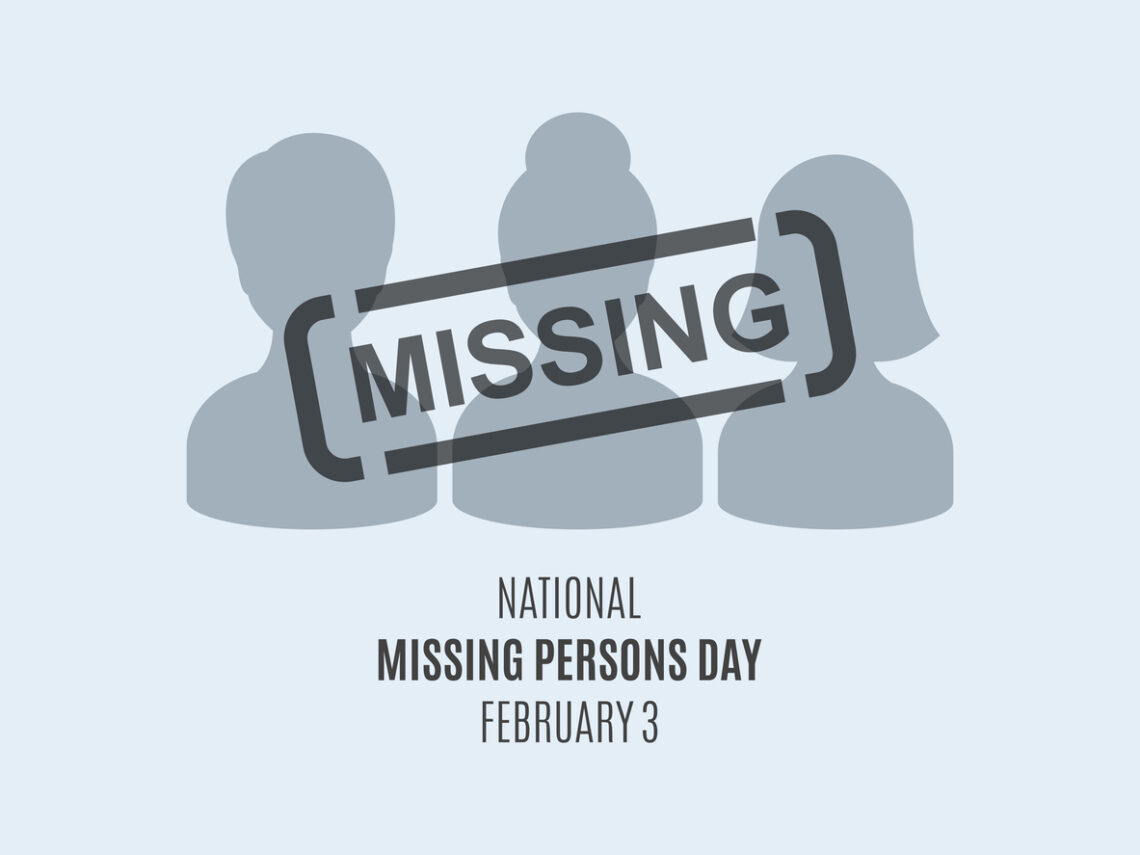
In 2018, Jo Ann Lowitzer founded National Missing Persons Day after her daughter went missing in 2010, hoping to spread awareness and education about the often overlooked tragedies that occur on a daily basis. February 3rd now marks a day where we can further shed light on the ongoing crisis of missing and murdered people, specifically those who are at much higher risk.
Native American Disproportionate Risk
Native and Indigenous populations are disproportionately targeted in missing persons cases, often resulting in investigations being ignored, inaccurately recorded, and incomplete. The National Crime Information Center reported 5,487 cases of missing Native American women and girls in 2022.
The majority of these people were aged 0-17. In 2024, there were 10,248 reported cases of missing American Indian and Alaska Native people, 6,871 of whom were under 18 years old. This disproportionate trend of Native missing persons is attributed to a long history of racism, poor record keeping, and a lack of media attention.
Systemic Racism and Its Impact
Alongside the cultural genocide and displacement of millions of Natives, negative and racist stereotypes continue to play a role in the lack of investigation and prosecution of missing persons incidents.
Victims are often blamed due to struggles involving substance use and homelessness, and dehumanization and hyper-sexualization of Native women have contributed to the lack of assistance and higher rates of human trafficking. A study in 2021 shed light on the lack of initial reports made due to the fear and mistrust of law enforcement and the expectation that their cases would not be properly investigated. Their hesitations are justified, as in 2016 the National Crime Information Center reported 5,712 missing Native American women and girls, the National Missing and Unidentified Persons System (NamUs) only logged 116 of said cases. Research has also found that a significant number of Native women are misclassified as Hispanic or Asian on missing persons forms, further complicating searches.
A history of discriminatory policy also plays a strong role in the lack of investigations and prosecutions. The Oliphant v. Suquamish Indian Tribe (1978) Supreme Court ruled that non-Native men who assault or murder Native women on reservations cannot be arrested or prosecuted by tribal authorities. Despite being partially overturned in 2013 and 2022 with additions to the Violence Against Women Act (VAWA), political protections are still sparse for Native populations.
Missing, Sexual Assault, and Homicide AI/AN Statistics at a Glance
- More than 4 in 5 AI/AN women have experienced violence in their lifetime
- More than half (56.1%) of AI/AN women have experienced sexual violence in their lifetime
- More than half (55.5%) of AI/AN women have experienced physical violence by intimate partners in their lifetime, 48.8% have been stalked
- AI/AN women are almost twice as likely to have experienced rape compared to non-Hispanic white women
- AI/ANs are four times more likely to go missing in Montana, and add up to over a quarter of missing persons reports
- The average missing time for AI/AN women in Arizona in 2020 was 21 years, with 28% of cases caused by homicide by intimate partners
- Homicide rates for AI/AN women in Wyoming was 6.4 times higher than homicide rates for non-Hispanic White women in 2020
- AI/AN women are “over-represented as domestic violence victims” in Alaska by 250%
- In a 2019 survey conducted in Washington consisting of 148 respondents, 94% of AI/AN women report having been raped or coerced in their lifetime
How You Can Help
Action must be taken to reverse the overwhelming statistics of AI/AN missing and murdered persons. Here are some ways we can help:
- Educate yourself on the MMIW / MMIWR Movement (Missing and Murdered Indigenous Women)
- Spread awareness in your community and over social media to shed light on the missing persons and murder statistics of Native/Indigenous people
- Share helplines and resources with others, such as the Strong Hearts Native Helpline
- Follow advocacy groups on social media, join newsletters, and donate to support your local tribes and communities around the country
References:
- Human Rights Research Center – Disappearance of Native American Women in the U.S.
- National Crime Information Center’s Missing Person Statistics – 2024 Missing AI and AN Persons
- U.S. Department of Interior Indian Affairs – Missing and Murdered Indigenous People Crisis
- National Congress of American Indians (NCAI) – Violence Against AI/AN Women & Girls, Data Trends
- WeRNative – What is the MMIW Movement?